


































our country will carry out the space exploration science satellite program to explore the origin of life in the universe

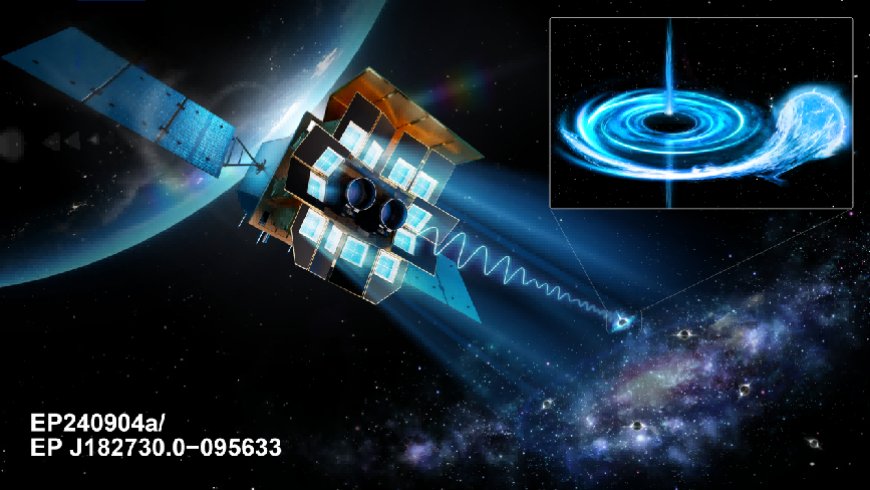
The reporter learned from the press conference of the latest highlights of the space science pilot project held today (November 24) that during the "15th Five-Year Plan" period, focusing on major frontier issues such as the origin of the universe, the origin of space weather, and the origin of life, the National Space Science Center of the Chinese Academy of Sciences will organize the implementation of the "HarmonyOS Project", "Kuafu-2", extrasystem earth survey, enhanced X-ray time-varying and polarization space observatory and other space exploration science satellite programs, and strive to achieve the "Dark Age of the Universe", the solar magnetic activity week, New breakthroughs have been made in the exploration of exoterrestrial terrestrial planets.
Continue to lay out cutting-edge tasks and promote the leapfrog development of space science
Through the solid advancement of these space science satellite missions, China's space science will achieve a leap from "running side by side" to "leading" in more directions, continue to produce more key, original and leading major scientific and technological achievements, strongly support high-level scientific and technological self-reliance and self-improvement, realize the all-round development of our country's space science, space technology and space applications, and make landmark contributions to the construction of a space power and a scientific and technological power.
At this press conference, the National Space Science Center of the Chinese Academy of Sciences also released a series of major scientific breakthroughs made by space science satellite missions in the fields of cosmic temporary objects, cosmic ray propagation, and solar eruptions.
Since the implementation of the special project, our country's space science has shown a strong development trend of multiple breakthroughs and cluster bursts
According to reports, since the launch of the space science pilot project of the Chinese Academy of Sciences in 2011, it has successfully developed and launched eight scientific satellite missions, including "Wukong", Shishi 10, "Mozi", "Huiyan", "Taiji-1", "Huairou-1", "Kuafu-1" and "Tianguan" satellites, and has achieved a series of major original achievements and created a number of China's firsts and even the world's firsts. As our country's first systematic support for space science research, this project marks that our country's space science innovation and development have entered the "fast lane", achieved a historic leap from "following" and "running" to "leading" in some fields, and promoted Chinese space scientists to gradually move to the center of the world stage.
In the past 15 years, the special project has embodied the continuous expansion and deepening of scientific research in the direction of the "four poles":
In terms of extreme macroscopic, the world's first X-ray all-day sky map was drawn;
in terms of extremely microscopic aspects, the fine structure of the world's most accurate cosmic ray electron, proton, helium nucleus and boron nuclear energy spectra has been obtained so far;
In terms of extreme conditions, the strongest magnetic field in the universe was directly measured for the first time, and the high-speed jet closest to the black hole was detected.
In terms of extremely comprehensive intersection, it has achieved a high degree of integrated development of science, technology and engineering.
While scientific breakthroughs have been made, the project has also led to the leapfrog development of cutting-edge payload and satellite platform technology. our country has broken through key technologies such as satellite-ground optical path alignment, built the first international level X-ray calibration beamline in China, developed the world's leading 1~2 orders of magnitude large-field of view, high-sensitivity lobster eye X-ray telescope, and realized the integrated design of satellite platform and payload.
A new task system of "Chief Scientist+Engineering Two Generals" has been established in the special project, cultivating a group of leading talents and innovative teams, and emerging numerous young scientific research backbones who are brave enough to shoulder heavy responsibilities, forming a high-quality talent team with reasonable hierarchy and both moral integrity and talent. At the same time, China's space science discipline system continues to improve, and the construction of key laboratories has achieved significant results, laying a solid foundation for the implementation of subsequent tasks.
The special project also actively carries out comprehensive and multi-level international cooperation, creating multiple new paradigms for international cooperation. The "Smile" satellite is the first in-depth cooperation project between the Chinese Academy of Sciences and the European Space Agency (ESA, hereinafter referred to as "ESA") at the task level in all directions and all cycles. The "Tianguan" satellite is led by China and jointly participated by the European Space Agency, Germany, and France. It is the first time that the European Space Agency has participated in a Chinese space science mission as an "opportunity mission". By forming international scientific teams and promoting data sharing, China continues to enhance the international influence and effectiveness of scientific satellites.
The discovery of new X-ray temporary sources has promoted new breakthroughs in the research of black holes, neutron stars, and gamma-ray bursts
The discovery of a new type of X-ray transient source EP241021a by the "Tianguan" satellite provides key clues for understanding this mysterious transient object. The detection of the X-ray dim explosion EP240904a in the Milky Way opens up a new way for the discovery of stellar-scale black holes. The temporary source EP240801a, which was detected for the first time after realizing "autonomous triggering and automatic follow-up", poses a challenge to the traditional gamma burst classification.
The "Wisdom Eye" satellite has achieved fruitful results in the density measurement of the Earth's atmosphere, the flare mechanism of black hole accretion and explosion in the Milky Way, the radiation mechanism and surface magnetic field of accretion millisecond pulsars, the ignition position of nuclear combustion on the surface of neutron stars, and the minimum light change time scale of the brightest gamma-ray burst.
"Huairou-1" discovered that there are new subtypes in gamma bursts produced by the merger of dense stars, which expanded people's understanding of gravitational wave electromagnetic counterparts. Revealing a new magnetic dome explosion mode is of great significance for understanding its explosion mechanism. By discovering a unique set of periodic particle sedimentation events, the understanding of the radiation environment in low-Earth orbit space has been deepened.
For the first time, the hardened structure of secondary cosmic ray boron nuclear energy spectra was discovered
"Wukong" achieved the first accurate measurement of secondary cosmic ray boron spectroscopy in the energy region above 1TeV/n in the world, and found its hardened structure with a high confidence of 8 times the standard deviation. The change amplitude of boron spectral index is twice that of primary cosmic ray spectral indices such as protons and helium nuclei, indicating that hardening may be due to propagation effects, which is of great significance for revealing the propagation mechanism of cosmic rays.
The anomalous correlation rate between solar eruption high-energy C-class flares and CME is revealed
The observation of "Kuafu-1" found that the correlation rate between high-energy C-class flares and coronal mass ejection (CME) was much lower than expected and traditional models, and only 5 of the 127 high-energy C-class flares were accompanied by CME, and all of them were narrow CMEs generated by jets. This provides new clues to decipher the mechanism of solar bursts and the origin of high-energy particles.
What's Your Reaction?
 Like
1
Like
1
 Dislike
0
Dislike
0
 Love
0
Love
0
 Funny
0
Funny
0
 Angry
0
Angry
0
 Sad
0
Sad
0
 Wow
0
Wow
0